Malawi - Atsikana Walani Technical College


Malawi
Malawi is one of the small countries in Africa. With 120,000 km², it is about the size of eastern Germany. The country is characterized by the elongated Lake Malawi (formerly Lake Nyassa). The population of Malawi lives to 80% from subsistence agriculture. It is estimated that 1/3 of the people cannot adequately meet basic food needs. Women do most of the work in the household, raise the children, cultivate the fields and are responsible for feeding their families.
News from the projects
New training facilities at the AWTC are nearing completion

At the Atsikana Walani Technical College (AWTC) in Malawi, construction work on two new training buildings is making great progress. The buildings for the motorcycle mechanics and food processing and culinary arts programs are now nearing completion. With this expansion, the AWTC is adding two hands-on programs to its curriculum, designed to open up new career opportunities for young women. Especially in Malawi, where unemployment and economic uncertainty pose a major challenge for many families, qualified vocational training is of particular importance. The new facilities will provide modern and safe learning environments where practical skills are taught and career opportunities are created. With the expansion of the training center, the AWTC continues to invest in the advancement of young women and in their ability to eventually earn their own income and build a self-determined life.
Seeking support for a greenhouse at the Walani Vocational Training Center in Malawi

With the end of the rainy season, a particularly challenging period begins in Malawi: the soil dries out quickly, water becomes scarce, and many families must secure their harvests under difficult conditions. Malawi is one of the countries most severely affected by the impacts of climate change. Frequent droughts and irregular rainfall are making reliable agriculture increasingly difficult. Students and staff at the Atsikana Walani Technical College (AWTC) also face these challenges. This makes sustainable solutions that enable an independent, year-round supply all the more important. A sturdy greenhouse is intended to address this: It would enable the protected cultivation of vegetables and herbs such as tomatoes, peppers, and medicinal plants, regardless of heavy rainfall or intense sunlight. At the same time, the harvests can be better processed and preserved, which both improves the food situation and creates income opportunities. The plan is to build a sturdy greenhouse made of a metal frame and durable plastic sheeting that can withstand even extreme weather conditions. Approximately €6,500 is needed for the project. With your support, you will help to sustainably improve local living conditions and enable young women at the AWTC to receive a future-oriented education. Donate via PayPal here.
Visit by Engagement Global / bengo to the AWTC and the Light of Hope School

In mid-March, our local project team MoHDevs in Malawi welcomed a visit from Engagement Global / bengo (BMZ). The visit provided a valuable opportunity to present the work carried out over the past few years directly on site and to engage in dialogue with the responsible parties. In addition to providing insights into ongoing programs, the focus was also on discussing challenges and future development opportunities. Particularly important was the shared vision for the future: During the meeting, the planned new project in collaboration with Difäm (German Institute for Medical Mission) was also presented and discussed. The goal is to further expand existing initiatives and sustainably strengthen support for women, girls, and families. We would like to extend our sincere thanks to Engagement Global / bengo for their visit, their interest in our work, and the constructive exchange. Such on-site meetings are an important part of our partnership-based collaboration and help us to jointly develop projects and ensure their long-term effectiveness.
Atsikana Walani AWTC: Enrollment for the new semester

Enrollment for the coming semester is currently underway at the Walani Women's Center AWTC in Malawi. Many young women are registering or expressing great interest in the courses and training programs on offer. The demand clearly shows how important vocational training and qualifications are for young women in the region. At the same time, it is becoming apparent that not all interested women can afford the necessary tuition fees. Young women from the Dzaleka Camp in particular have no financial means whatsoever due to the current critical situation. Therefore, even comparatively small contributions represent a high hurdle. Without additional support, they are denied access to education and thus to independent career prospects. The Herrnhuter Missionshilfe is therefore specifically looking for scholarships and funding opportunities to enable as many young women as possible to participate in the courses at the AWTC. Every contribution helps to open up educational opportunities and create long-term prospects. Donations for scholarships here.
Voices from Malawi on the 2025 election

The ongoing elections in Malawi are a moment of great hope for many people in the country. The Herrnhuter Missionshilfe organization discussed the topic with the team from MoHDevs and with students from the Atsikana Walani vocational training center for women. The desire for better education and health care, more job opportunities, and stable economic development was often mentioned. Young people, who make up the majority of the population, are seen as the driving force for change—reinforced by the growing number of young candidates. The role of women is also in focus: more female leaders are needed to promote equality and bring new perspectives to politics. At the same time, there are concerns about low voter turnout, lack of information, and possible conflicts over the results. Despite these challenges, the desire for a united Malawi that seizes its future opportunities and puts the well-being of its people above party political interests prevails.
Dzaleka in need – Light of Hope school fights for survival

The withdrawal of the UNHCR is hitting the Dzaleka refugee camp in Malawi hard – and directly affecting the Light of Hope school, which is jointly run by the Moravian Church Malawi, MOHDEVS and the Herrnhuter Missionshilfe. The background to this crisis is the drastic cuts in US funding for UN organisations under the Trump administration. The UNHCR also lost important funds at that time – with devastating consequences that continue to this day. More than 70,000 refugees now live in the camp. The situation is dramatic: there is a lack of food, clean water, shelter and medical care. Amidst this emergency, the school is a place of hope. Over 1,000 children receive education, a warm meal and a sense of security here. ‘The school is more than a place of learning – it is hope in the midst of crisis,’ says a local teacher. Please help ensure that Dzaleka is not forgotten – by sharing this situation and raising awareness.
“Safe Space” Project - Protection and prospects for refugee girls from the Congo

In the Dzaleka refugee camp, which has long exceeded its capacity, thousands of people from crisis regions such as the Democratic Republic of Congo are seeking protection – many of them young women who have experienced violence and exploitation during their flight. Life in the camp is particularly dangerous for them. Together with MoHDevS, the local partner of Herrnhuter Missionshilfe, the Atsikana Walani Technical College has launched a “Safe Space” emergency aid program: 20 girls are provided with a safe haven offering accommodation, food, and psychosocial support. In a protected space (“Safe Space”), they can find peace, talk about their experiences, and gain new strength. At the same time, the young women are given access to education and vocational training – for example in tailoring, electrical engineering or solar technology. The aim is to give them long-term prospects and economic independence. This pilot project goes beyond mere emergency aid: it provides protection, strengthens self-confidence and opens up concrete opportunities for the future – for a life in dignity.
Baking without electricity – donations sought for a brick oven for training at the AWTC
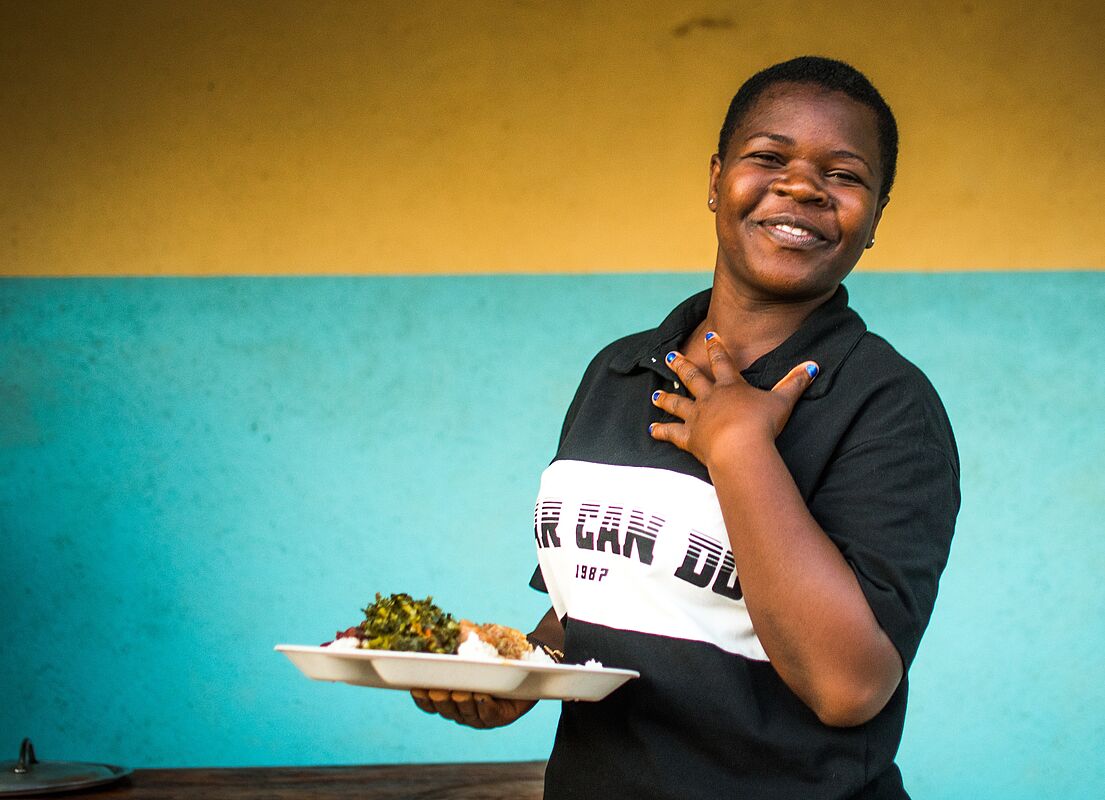
At the Atsikana Walani Technical College (AWTC) in Malawi, young women receive practical training in food production. Bread and pastries are just as much a part of the curriculum as hygiene, ingredient knowledge, and economic efficiency. However, one key element has been missing until now: a suitable oven. An electric oven is out of the question – the AWTC is not connected to the public power grid, and solar technology alone is not sufficient for continuous operation. The plan is therefore to build a brick outdoor oven that can be fired with briquettes. This would not only enable continuous training, but also be used to feed the students and staff and contribute to self-sufficiency. Bread and pastries can also be sold at the market, generating a small income for the next food purchases. Around €900 is needed for the construction, plus funds for the initial purchase of fuel. We are therefore looking for supporters who can help make this dream come true for the young women. With your donation, you will help make the vocational training at the AWTC practical and future-oriented.
Construction of a well at the Light of Hope School: Access to clean water in Dzaleka Camp
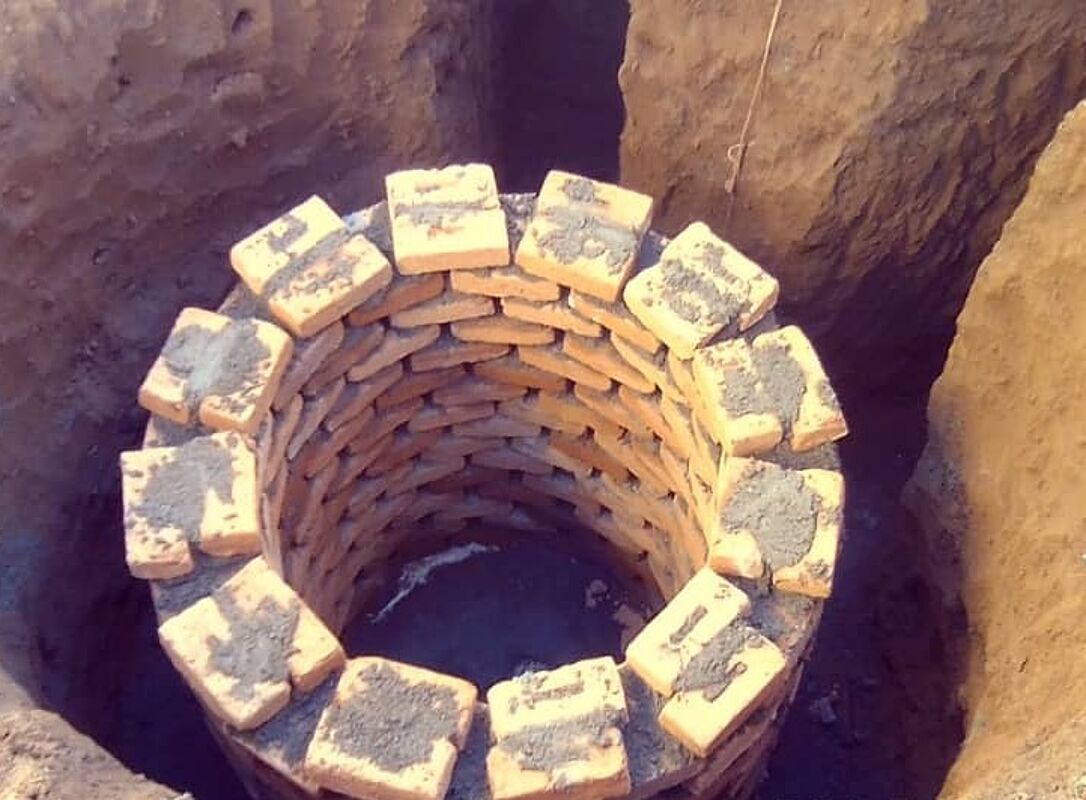
A deep well with a solar-powered water pump is currently being constructed in the Dzaleka refugee camp in Malawi – an urgent project given the dramatic supply situation on site. The camp, originally designed for 10,000 people, now has over 60,000 inhabitants. Hygienic conditions are catastrophic and the existing water supply is completely inadequate. In addition, Malawi is one of the countries particularly hard hit by the effects of climate change. Recurring droughts are exacerbating the already severe water shortage – the situation is extremely stressful, especially for children and women, who are often responsible for fetching water. The new well will be built on the grounds of the Light of Hope School run by the Moravian Church. With large storage tanks, ten water extraction points, a septic tank, and a trained local management team, it will provide reliable clean drinking water for many families in the camp in the future – even during the increasingly frequent dry seasons.
Digital opportunities for girls in Malawi: tablet collection campaign for the Walani Women Center
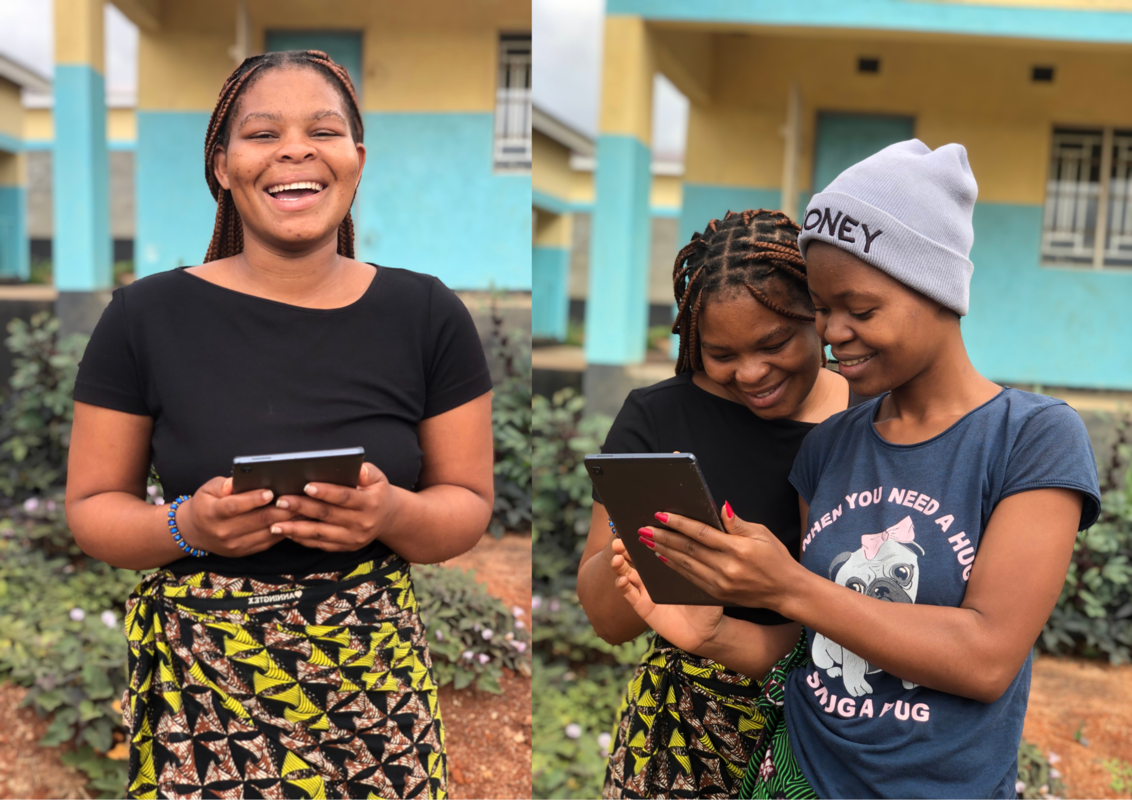
Atsikana Walani Technical College in Malawi will soon have a small school library that combines traditional books with digital learning media. The aim is to give young women access to modern education - including in professions that require technical know-how. While digital schooling has become a matter of course in many countries, it is still out of reach for many girls in rural regions of Malawi. However, digital education in particular opens up new opportunities: it enables individualized learning, promotes digital skills and creates prospects for training and careers. In cooperation with the handball players of FrischAuf Frauen Göppingen and the Werner-Heisenberg-Gymnasium Göppingen, Herrnhuter Missionshilfe is collecting well-preserved or new tablets with chargers and up-to-date software (to the call for donations here). The devices are used locally as a digital school library - a low-threshold access to knowledge that specifically promotes girls. Donations can be sent in until the end of June or handed in directly in Bad Boll: Herrnhuter Missionshilfe, Project “Walani”, attn. Markus Kuhn, Badwasen 6, 73087 Bad Boll. Every tablet counts - for education, participation and a better future.
Strengthening practical training: New workshop for sanitary installation at the AWTC
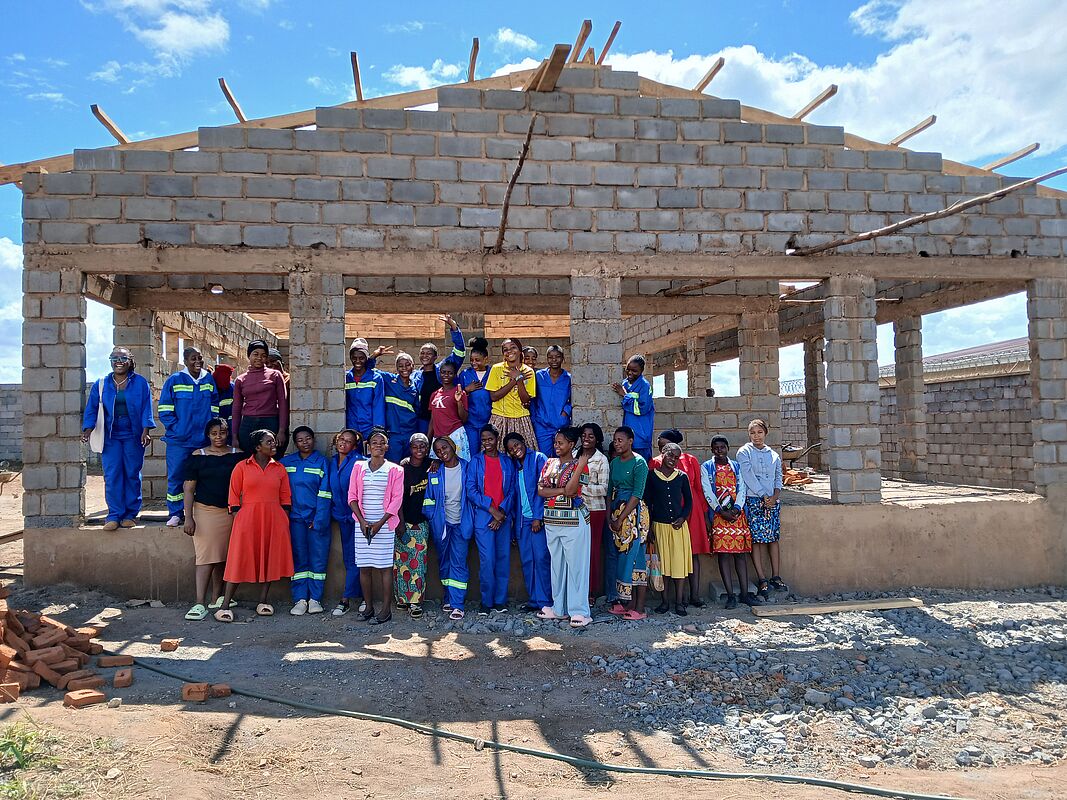
A new workshop for plumbing training is currently being built at the Atsikana Walani Training Centre (AWTC) in Malawi. The foundations have already been laid, thanks to financial support from the Dutch partner organization ZZG. Plumbing is one of the skilled trades that is still heavily dominated by men in many countries. The AWTC is committed to training young women in such fields in a practical, qualified, and future-oriented manner. The new workshop is an important step toward opening up concrete career prospects for young women from disadvantaged backgrounds, including girls from the nearby Dzaleka refugee camp. Through practical training, they have the opportunity to acquire craft skills, gain self-confidence, and secure their own livelihood in the future.
New gardening project for women in Mzuzu

Lilian Nyirenda joined the team at the Women Training Center in Mzuzu in February. In her new role, she coordinates income-generating measures for women, among other things. This week, she organized a first meeting with five participants to launch a new horticultural project. The focus is on growing and processing tomatoes. The aim of the project is to create a long-term source of income for the women involved. Other interested women have already signaled their participation. Infrastructural challenges are also being addressed: As the current water supply is not sufficient, the existing borehole is currently being deepened by three meters. This should provide sufficient water for agricultural operations in the future. The project is a further step in the expansion of practical training and income opportunities for women in the region.
Handmade book covers from AWTC

With great care and attention to detail, the trainees at the AWTC training center in Malawi produce stylish book covers for notebooks - each piece is unique. The hand-sewn covers are not only a beautiful accessory, but also part of an income-generating measure that contributes to the financial independence of the young women. A book cover - together with a matching notebook and a lovingly designed postcard - can be purchased for a donation of around 8 euros (including postage). The covers will also be available at the Herrnhuter Miisonshilfe stand at the Kirchentag. By purchasing them, you are not only supporting creative education, but also promoting education, independence and sustainable development on the ground. If you are interested, please send a message to: markus.kuhn@ebu.de
High-ranking visitor at Walani College: Ambassador Ute König visited the vocational training center for girls

A very special day at Atsikana Walani College and a highlight of the Herrnhuter Missionshilfe (HM) project trip to Malawi: in addition to the German ambassador Ute König, important representatives from UNHCR, TEVETA, the Malawi University of Science and Technology (MUST) and the police were also present in mid-October. Everyone was enthusiastic about the work that is done here every day to enable young women to have a better future through education. For the girls, but also for the HMH staff, it was an unforgettable highlight that once again emphasized the importance of education and training. The local project partner, MoHDevS, was also highly praised for its commitment. A day full of inspiration and appreciation for everyone! Here is a brief overview of the people present: HE. Ute Konig - German Ambassador, Roberline Flore Tozwen Teunkwa - UNHCR Senior Protection Officer/Deputy, Priscilla Kalumo - UNHCR Education Associate, Gloria Nyang'iye - UNHCR Public Relations, Elwin Sichiola - TEVETA Executive Director, Dr. Duncane Batizani - MUST Deputy Registrar - Academics, Dr. Bonet Kamwana - MUST Senior Lecturer, Dr. Petros Chigwechokha - MUST Senior Lecturer, Superintendent Mwakasyaya - Station Officer Lumbadzi Police.
Project from the women's work of the Moravian Church in Malawi officially launched

The first women's project of the Moravian Church in Mzuzu, Malawi has now officially started. There is an active Moravian Congregation in Lumbadzi, 20 kilometres north of Mzuzu. Under the name "Our hope, our business", 18 women started a sewing and handicraft group with great support from the congregation. They were equipped with sewing machines and have been trained in business management for over a year. In addition, numerous meetings and creative sessions were held to discuss topics such as customer acquisition and goals. Rev Juliana Miamba and Kristin Hentschel see the project as a great opportunity for the women to generate their own income in the near future and thus take a first step out of poverty. Good luck!
Become a sponsor for the "Walani" project

The Atsikana Walani Technical College in Malawi offers young women a safe place to live and the opportunity for vocational training. Many of the trainees come from the UNHCR refugee camp Dzaleka. With a sponsorship, you enable a girl from the Dzaleka camp or the surrounding villages to receive vocational training at Walani College. It covers the costs of training, accommodation, food, basic medical care, school materials and access to clean water. Our local partners look after the women during their 12-month training. As a sponsor, you accompany a young woman during this time and receive letters and photos. The cost of a sponsorship is 60 euros per month. But even smaller amounts can help. For further information, please contact markus.kuhn@ebu.de
Walani - Protection for Women

Girls and young women in Malawi often have no opportunity to attend school or learn a trade to secure their own livelihood. In the traditionally male-dominated society, they have little decision-making power. They have to help out in the household at an early age, are often married off at a young age, have their first child early and then no longer have the opportunity to finish school or even start vocational training. Sexualised violence is not uncommon. The current Covid-19 pandemic has exacerbated the situation for girls. The key issue in enabling girls and young women to lead a self-determined life and earn their own living is therefore to offer them a real opportunity on the labour market and to strengthen their own rights. The Walani project has created a shelter for girls and young women in need of protection, where they can live and learn without fear of violence, learn a trade and prepare for a self-determined life in dignity.
The aim of the Walani project is to build a holistic women's education centre, starting with a vocational school for young women, dormitories and living quarters for the girls, a women's shelter with small residential units and a small kindergarten for single mothers, a sports field as well as adjoining gardens and livestock farming, so that the young women can complete their training in a protected space. They can concentrate on their vocational training and prepare for a self-determined life with new self-confidence. The daily work at the Light-of-Hope School at the UNHCR Dzaleka refugee camp (over 70,000 refugees, half of whom are under 18) has shown that it is extremely difficult for girls and young women from the refugee camp in particular, but also from the surrounding very rural communities, who receive little to no support from home and mostly come from very poor backgrounds, to find access to a vocational school or start an apprenticeship. However, vocational training is a central element of a self-determined life. The focus is therefore on enabling disadvantaged girls and women, including those who have already graduated from the Light of Hope School, to receive vocational training and providing them with accommodation in the adjoining dormitory building.
In a first project in 2022/2023, the vocational school - the Atsikana Walani Technical College (AWTC) - was built, including classrooms and workshops, a protective wall and the dormitory and recreation room with kitchen and sanitary facilities for the young women.
Since summer 2023, two training programmes have been offered, one of which is in the rather "male-dominated" field of electrics (with a focus on solar) to give women "fear-free" access to promising professions. In addition to the one-year training programmes, the vocational school also offers various short courses that teach general basic skills, such as bookkeeping or English, as well as compulsory courses on sustainable agriculture. Computer courses are also planned as soon as funds allow and a computer room and equipment can be built. The training courses will be run by female teachers, so that the young women will already be able to act as role models.
A dormitory and living space enables girls from the Dzaleka refugee camp in particular to live on the premises of the vocational training centre for the duration of their training, so that they can concentrate on their training independently of home and support each other.
The long-term plan is for the training centre to be self-financing in the long term, not only through self-sufficiency but also through smaller income-generating activities (selling food, sewing and selling clothes/school uniforms, repair services, training courses, etc.) or renting out the premises during holidays or in the evenings. At the same time, the women learn to live independently and provide for themselves and prepare for an independent life outside the vocational training centre.
Courses and lectures on sexual reproductive health, women's rights, early pregnancies, HIV/AIDS, equal rights and sustainable agriculture/cultivation methods are held regularly in the evenings in the classrooms and are intended to shape the self-image and role of women in Malawi in the long term.
Over the past few months, the first step has been to build and equip a training centre with two classrooms and two workshop rooms as well as a dormitory and sanitary facilities. Currently, two training programmes can be taught in parallel and a total of around 80 girls can start their training and live in the adjoining dormitory. The aim is to train a total of 4 - 6 classes in the vocational training centre so that 160 - 240 girls per year can benefit from it.
This requires the following measures, which are to be realised in the coming years:
- A computer room with equipment for 40 workstations as well as a solar system that enables an uninterrupted power supply for work on the PC (the school is not connected to the public power grid and is supplied exclusively by solar power)
- Two additional school buildings with 2 classrooms each, including desks and chairs for a total of 80 girls each and a blackboard/desk
- A workshop building with 3 workshops including equipment for three additional training programmes
- An administration building with office, staff room, materials store and meeting room (assembly hall) including furniture
- Two dormitories for approx. 80 girls each on the school grounds incl. 40 bunk beds, mattresses and shelves each
- Dining hall (canteen) incl. tables and chairs: In view of the number of female students and teachers living on the premises for the duration of the training year, it is important to strengthen the social interaction and self-confidence of the women. Communal meals, which can be prepared in the kitchen, can be eaten together in a new dining hall / canteen. At the same time, the dining hall can be used to do school work, form small groups for various study groups or serve as a social meeting place for the girls and women.
- Tree planting and landscaping: Now that the first school and workshop buildings have been completed, the barren, previously treeless grounds urgently need to be landscaped so that trees and shrubs provide shade and prevent the sun, wind and heavy rain from eroding the soil. The access road must be paved and gravelled so that there is an access route to the school grounds even during the rainy season. The school grounds also need to be partially levelled and drainage around the buildings is required to prevent flooding during heavy rainfall. In addition, trees and shrubs urgently need to be planted to provide shade for the girls as well as to provide fruit and protect the soil from erosion.
- Residential buildings for female teachers: Well-qualified teaching staff are essential for a good level of education, but are very rare in Malawi. It is therefore necessary to offer female teachers incentives to keep them at the vocational training centre. Long journeys and a lack of living space make conditions more difficult. Small residential units for female teachers are an incentive (common in Africa) to get well-qualified teaching staff to train the girls and keep them at the school.
- Farm project (school garden / vegetable patches): A farm project (school garden / vegetable patches) is to be set up on a field adjacent to the training centre, which is to be used both for the self-sufficiency of the residents and for training purposes (farming and sustainable agriculture). This requires the purchase of the surrounding land and the procurement of working materials (rakes, seeds, etc.).
- Sanitary building with approx. 4 toilets for women and 2 for men
- Small kiosk / sales container on the main road not far from the training centre including furniture (shelves) to sell self-produced goods (sewing items, food, etc.) and generate a small income
- Stables for small animals / shelter for chickens for the self-sufficiency of the girls and women on the site and to teach sustainable cultivation and livestock breeding methods
- Small sports field / volleyball court: In addition to the lessons, the disadvantaged young women live on the site. It is therefore important to create a balance alongside the strenuous school day. As the school centre is very remote, the girls are largely confined to the grounds in their free time. A sports field and smaller leisure facilities offer variety in everyday life
- Solar system workshop building: A solar system has so far been installed on the kitchen building, which supplies all the buildings with electricity from sustainable energy for lighting etc. Some electrical appliances are used for training. Some electrical devices are used for training (sewing machines, electrical/solar etc.) as these have a greater power requirement, it is necessary to expand the existing system with some solar modules including storage.
- Women's shelter for approx. 10-15 single young women (mostly with experience of violence) as well as associated childcare and a small playground
- Scholarships/ sponsorships: Most of the girls and young women come from very poor backgrounds (mainly from the Dzaleka refugee camp and neighbouring communities) and have no income or support from home. Scholarships that support the girls for a year of training are therefore necessary in many cases.
- Tool kits for starting a career: After successfully completing their training, the girls receive a career starter tool kit with initial equipment for self-employment or employment, such as basic electrical equipment, screwdrivers, sewing machines and materials, etc., so that the young women can successfully start in the profession they have learnt.
You can now also follow the young women on social media. To the Instagram account here.


Project Managers and Project Partners
Bettina Nasgowitz | Markus Kuhn |
| Tel. +49 (0)7164 9421-22 bettina.nasgowitz@ebu.de | Tel. +49 (0)7164 9421-23 markus.kuhn@ebu.de |
in cooperation with
Moravian Humanitarian & Development Services
Moravian Church Malawi